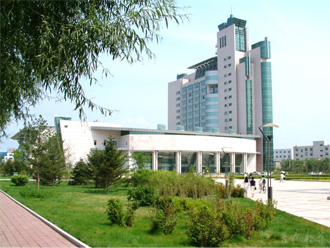
On November 21, 2024, the Symposium on China-Mongolia-Russia Cooperation under the Belt and Road Initiative was successfully held in Dongrong Building of Jilin University. The symposium took place at a critical juncture marking the 11th anniversary of the Belt and Road Initiative, the 75th anniversary of diplomatic relations between China and Mongolia, the 30th anniversary of the signing of the Treaty on China-Mongolia Treaty of Friendly Cooperation, and the 10th anniversary of the establishment of the comprehensive strategic partnership between the two countries. The conference aimed to further deepen academic exchanges and cooperation among scholars from China, Mongolia and Russia, and discuss the current status and future development directions of trilateral cooperation within the framework of the Belt and Road Initiative.
The conference was presided over by Professor Ba Dianjun, Deputy Director of the Northeast Asian Research Center of Jilin University. Foreign experts in attendance included Associate Professor Davaadorj Tumenjargal from the National University of Mongolia, Research Specialist Tsagaandorj Ariunaa from the General Education Department of the Ministry of Education of Mongolia, and Professor Ivanchenko Nadezhda from the National Research University Higher School of Economics of Russia. Experts specializing in area and country studies from the Northeast Asian Studies College of Jilin University, including Professor Xu Bo, Professor Wang Xiaoke, Lecturer Narina and Lecturer Jing Jing, attended and delivered speeches.
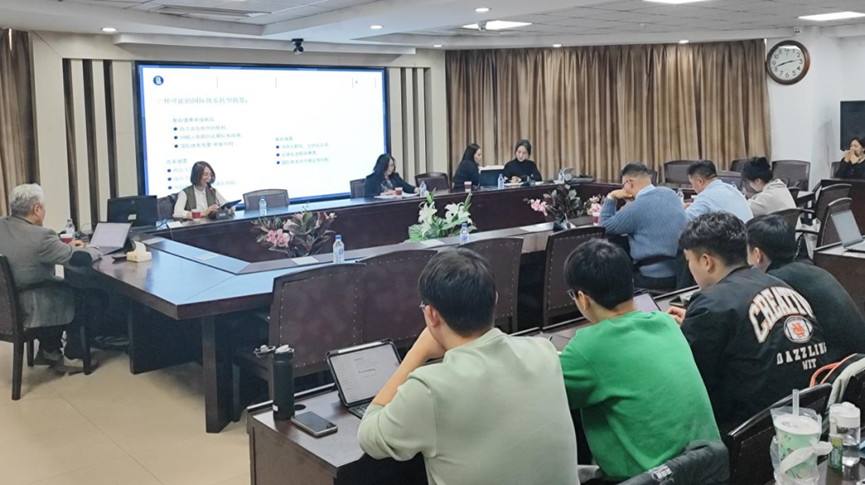
In his opening remarks, Professor Ba Dianjun extended a warm welcome to all participating scholars and elaborated on the remarkable achievements of the Northeast Asian Research Center of Jilin University in discipline development, talent cultivation and academic outputs. He noted that the center has long been committed to advancing interdisciplinary research and facilitating international cultural exchanges, which has not only played a vital role in supporting national strategies and diplomatic arrangements, but also laid a solid foundation for research on regional cooperation. He looked ahead to the future development of the center and underscored its great significance in academia and policy consulting services.
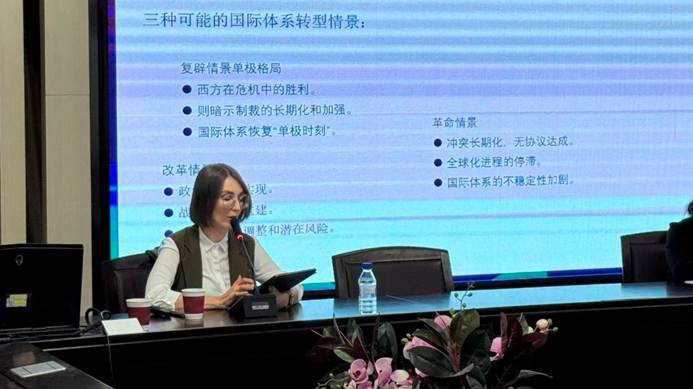
During the academic exchange session, participating experts conducted in-depth discussions on current international hot topics and regional cooperation issues. Professor Ivanchenko Nadezhda from the National Research University Higher School of Economics delivered a report titled The Future and Consequences of the Russia-Ukraine Conflict, elaborating on diverse perspectives among Russian academia regarding the outlook of the conflict. She noted that Russian scholars generally identify three potential scenarios for the transformation of the international system stemming from the conflict: restoration, reform and revolution. Though geographically viewed as European regional crisis, the conflict has undoubtedly brought global repercussions. Associate Professor Davaadorj Tumenjargal from the National University of Mongolia presented a speech entitled Mongolia’s Parliamentary Election Process (1992–2024), introducing the organizational procedures of Mongolia’s democratic electoral system, voter turnout, and its significance for Mongolia’s political stability and development. The presentation offered attendees a crucial perspective for an in-depth understanding of Mongolia’s political system. Research Specialist Tsagaandorj Ariunaa from the General Education Department of Mongolia’s Ministry of Education delivered a report named Current Situation, Difficulties and Countermeasures of Mongolia-China Higher Education Exchanges and Cooperation. Focusing on bilateral higher education cooperation between Mongolia and China, she stated that over the past 70 years, the two countries have forged a diversified win-win pattern. Nevertheless, future cooperation still faces challenges concerning talent structure, scientific research collaboration and educational issues. She proposed to advance Mongolia-China educational cooperation to new heights by optimizing talent training models, deepening research partnerships, upgrading educational programs and strengthening cultural exchanges.
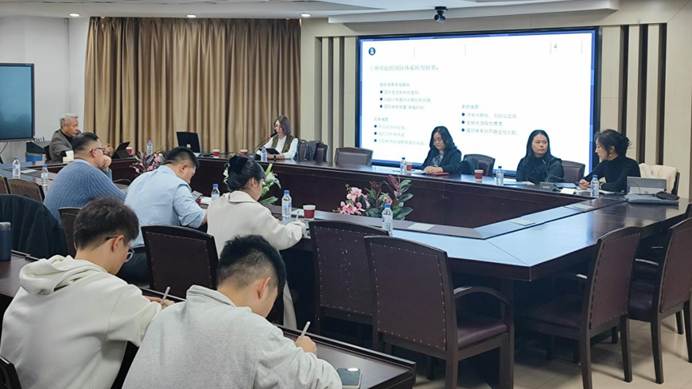
All participating experts agreed that the Belt and Road Initiative has brought unprecedented historic opportunities for the economic and social development of China, Mongolia and Russia. The three countries should further strengthen policy coordination, infrastructure connectivity, unimpeded trade, financial integration and people-to-people bonds, and jointly advance regional cooperation to deeper levels and broader fields. Teachers and students present interacted actively during the Q&A session, creating a vibrant academic atmosphere.
This symposium has built a high-level exchange platform for academic exchanges of China, Mongolia and Russia, deepened theoretical and practical research on multilateral cooperation under the Belt and Road Initiative, and provided strong support for the continuous advancement of regional cooperation.