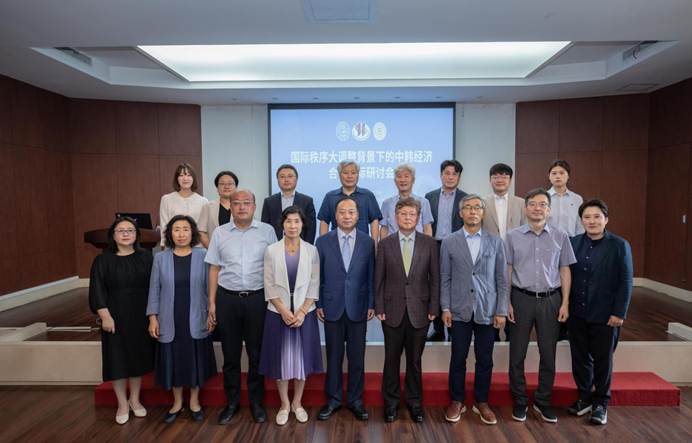
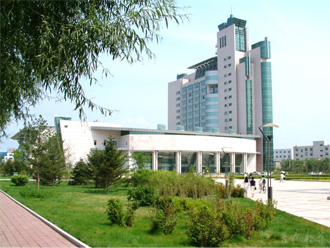
On August 21, 2023, the international symposium on “China–Korea Economic Cooperation under the Background of Major Adjustments in the International Order” was successfully held at Jilin University. The symposium was jointly organized by the Northeast Asian Studies Center of Jilin University, the Northeast Asian Studies College of Jilin University, and the Korea International Economic Association. More than 20 experts and scholars from institutions including Korea University, Yonsei University, the University of Seoul, the Korea Institute for Industrial Economics and Trade, the National Institute of International Strategy of Chinese Academy of Social Sciences, and Jilin University participated in the meeting.
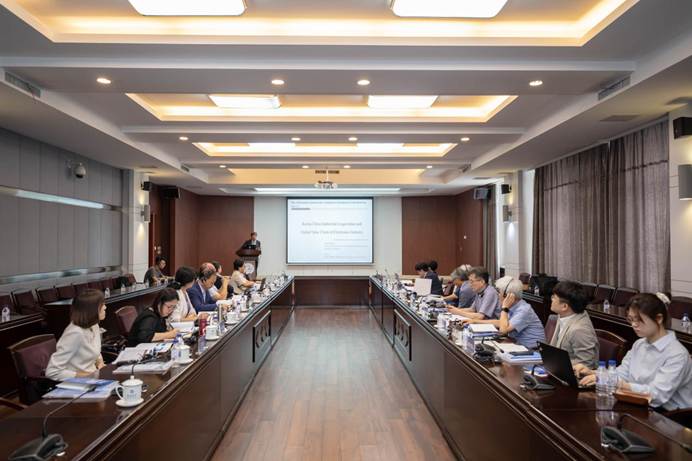
Professor Wu Hao, Dean of the Northeast Asian Studies College of Jilin University, and Professor Kang Sungjin, President of the Korea International Economic Association and professor at Korea University, delivered opening remarks respectively. Professor Wu Hao welcomed and expressed gratitude to the Korean scholars, expressing hope that the symposium would further strengthen cooperation between Chinese and Korean scholars, promote the continued development of China–Korea economic cooperation, and contribute to peace and stability in Northeast Asia. Professor Kang Sungjin thanked the Northeast Asian Studies Center of Jilin University and the Northeast Asian Studies College for their careful preparation of the conference, and expressed hope that the symposium would serve as an opportunity to strengthen exchanges and cooperation between the Korea International Economic Association, Korea University, and Jilin University, particularly by enhancing communication among young scholars.
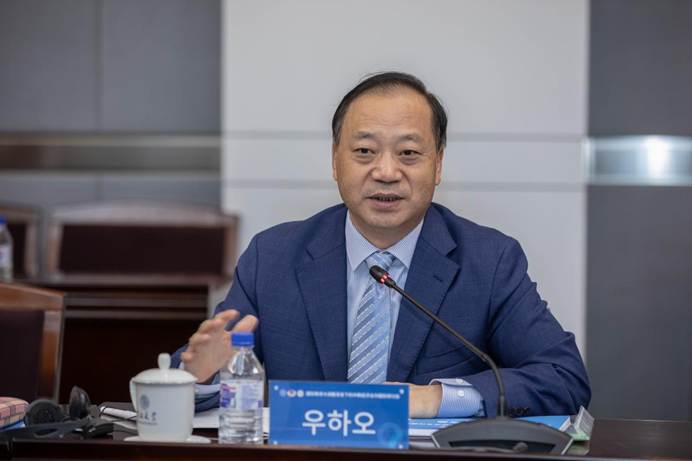
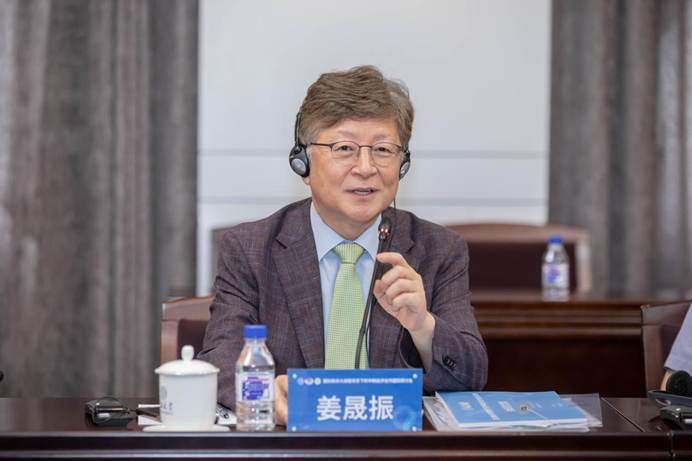
Professor Kang Sungjin, President of the Korea International Economic Association; Professor Zhang Huizhi, Deputy Director of the Northeast Asian Studies Center of Jilin University; Kim Jae-deok, Chief Representative of the Korea Institute for Industrial Economics and Trade Beijing Office; and Associate Professor Xuan Chunji of the Northeast Asian Studies College of Jilin University delivered thematic presentations. Based on the four thematic sessions, Chinese and Korean scholars engaged in in-depth discussions on China–Korea cooperation under China’s industrial transformation, digital trade, eco-friendly transformation of traditional industries, and the development of emerging industries.
Against the background of complex changes in the political and economic situation of the world and Northeast Asia, scholars from both China and Korea fully exchanged research findings and jointly discussed potential areas of cooperation between the two countries’ governments and enterprises in fields such as the economy, society, climate change, and sustainable development. They also expressed a shared commitment to deepening cooperation across various sectors between China and Korea.